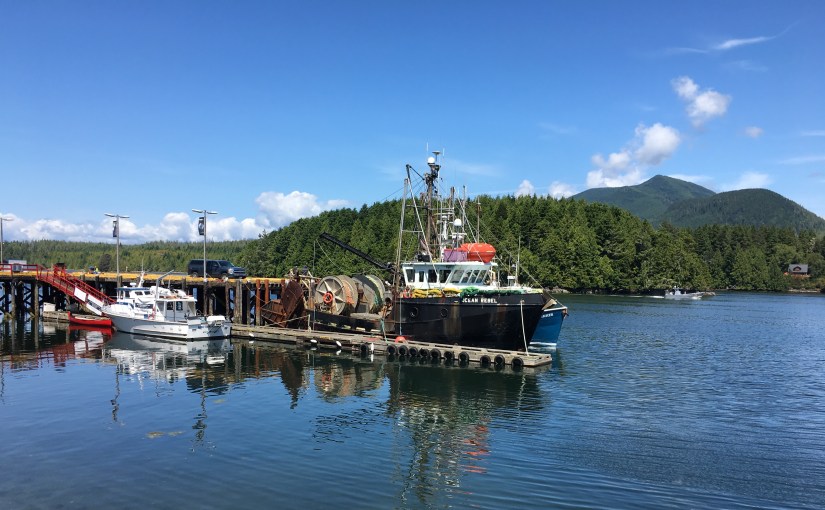
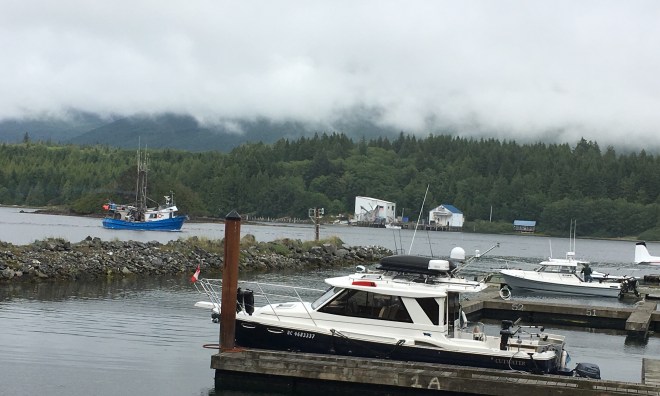
Well, this summer is flying by! We’re starting August with a sneak preview of autumn, expecting somewhere between 100-150mm of rain Thursday through Friday. By the time this piece is posted, the front will have blown through and gentle sunshine will reappear, enough to warm things up and kick start Fogust. It’s always meteorologically interesting on the west coast!August/Fogust
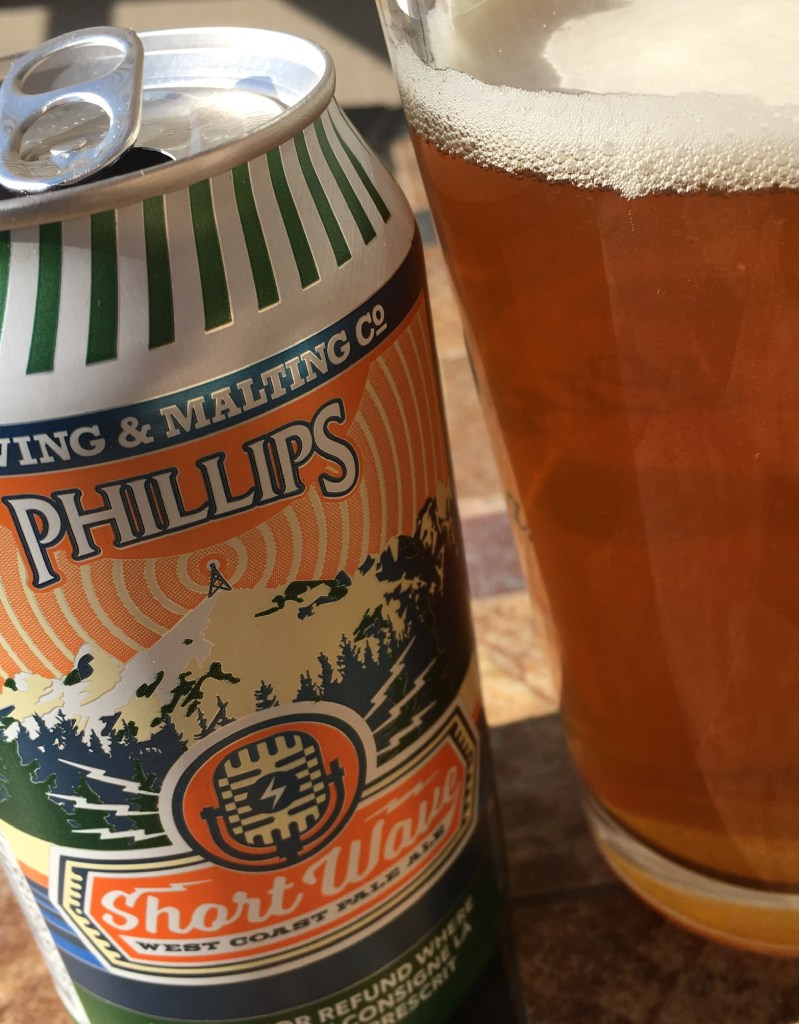
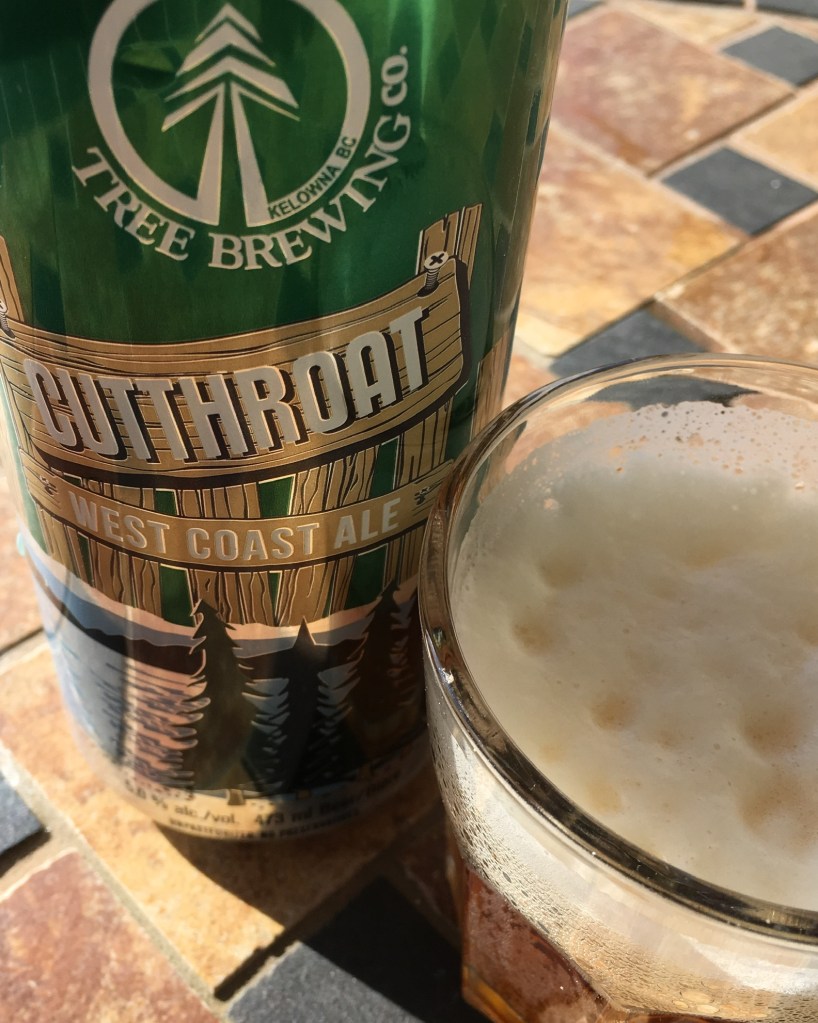
Last weekend saw the Ukee Days celebration, a fun acknowledgement of life at the end of the road. Saturday started with a parade – every vehicle with a siren seemed to participate, much to the delight of the children lining the route. There were some amusing sights to go with the sound. The parade went down Seaplane Base Road to the fairground and a field of tempting deep fried foods and a beer garden. As you know, I’m quite an avid gardener and did peruse the beer garden. The Tofino Blonde was thriving…
After an afternoon of logger sports – axe throwing – and a talent show, Saturday night ended with a more musical noise, four local-to-the-island bands entertaining the crowd. There were more kids and families and less marijuana than last year, and call me an old fuddyduddy, but this seemed better. Maybe it was too many visits to the beer garden, but for the life of me I couldn’t understand or hear the words being sung by Illvis Freshly – Back It Up – but they were energetic in their delivery.
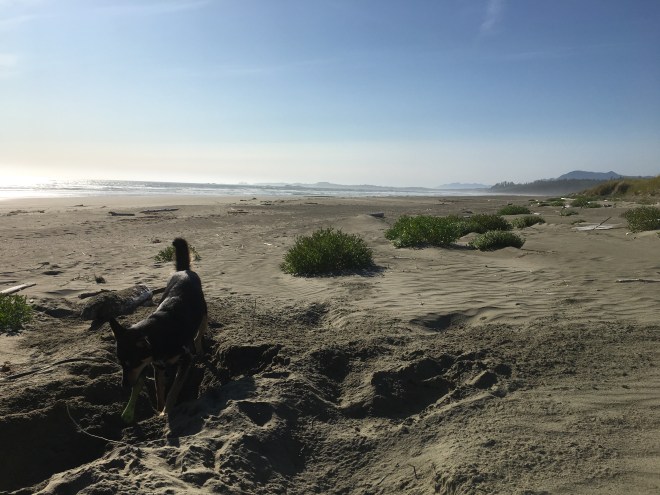
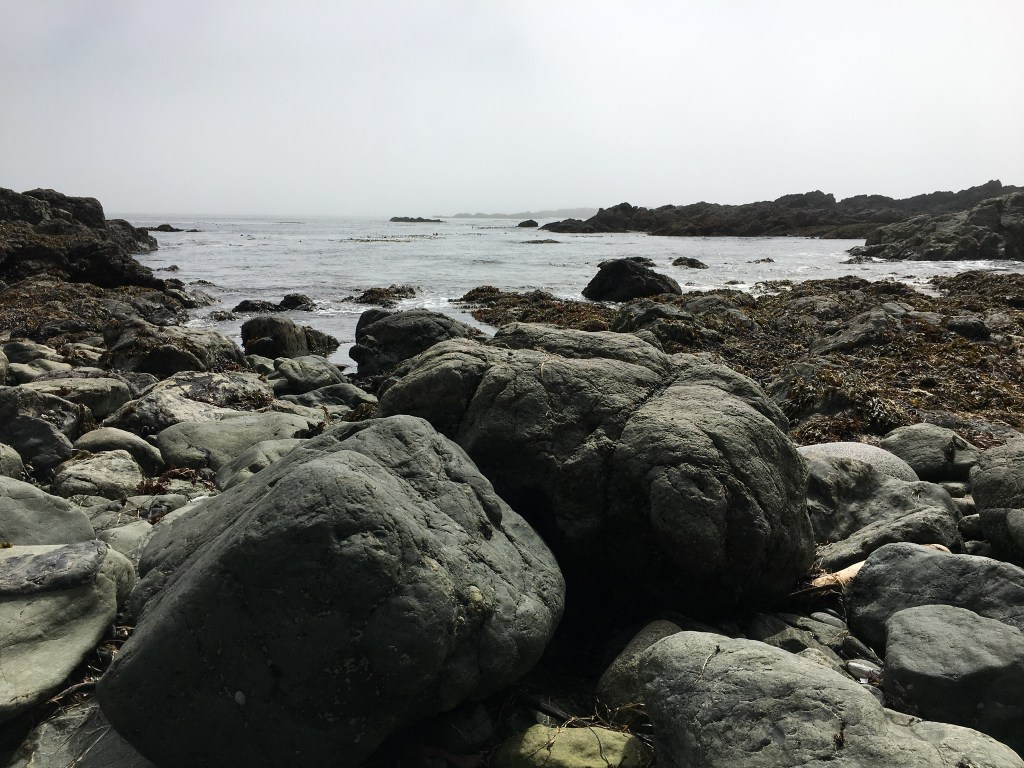
We recovered from Saturday by taking a long beach hike and our dinner out to Wick Beach late afternoon/early evening, enjoying the long stretch of sand and all the quiet. Moderate Pacific waves rolling in at the turn of the tide, with sandpipers scurrying and bald eagles swooping and gliding. Best of all, an osprey dropped into the surf and came up with a fishy prize. As it turned back to shore, it had to evade a bald eagle intent on a share – or all – of the treasure. The osprey got away.
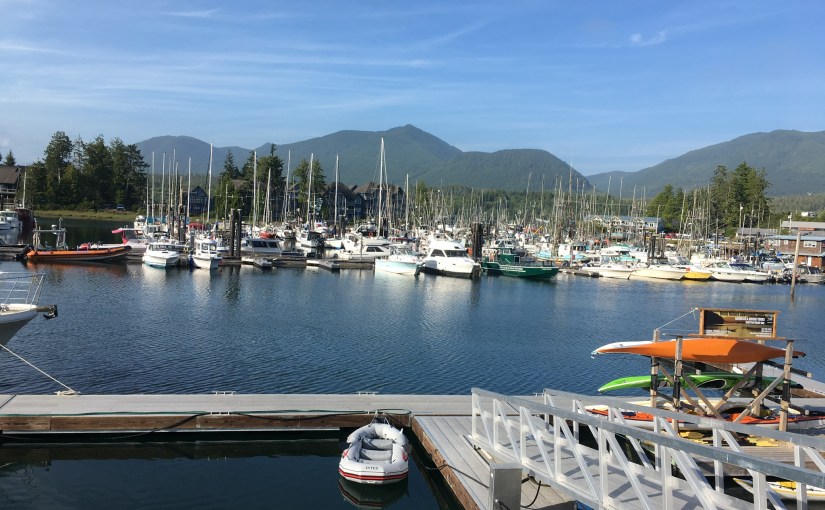
It’s not been all beach walks and loud music music the past week. We’ve also maintained our commitment to propping up the local coffee economy with fairly frequent stops at either the Gray Whale (maybe the best coffee in Ucluelet, so let’s keep that our little secret) or The Foggy Bean (possibly the best named coffee in Ucluelet or even the universe, but it’s ok to disagree!) I particularly enjoy going to The Foggy Bean because they are located in the renovated church that is also going to house the new Ucluelet Brewing Company. Opening Summer 2018! Nope, opening Summer 2019! Nope, opening October 2019. We’ll see. I like to press my nose up against the window pane to check on the progress inside. I can say they are currently a staircase short of a riser or two. No, really. October seems optimistic, but here’s hoping.Coffee stop – four coffee shops two minutes or less from here (but keep that quiet)
I’ll leave it here for this week. As I look out of the window, I can see the “atmospheric river” (thank you, Weather Network) is currently flowing over Ucluelet, and there’s a very pleasant drumming of raindrops on the roof. I can’t make out the words, but the rhythm is great.
…well, three or four made a splash near our kayaks as we paddled in the bay earlier this week. The fish, eagles, bears and other birds have been a welcome distraction from the unicorns frolicking in the sunny uplands of Brexit Britain – all will be well there if the new PM is to be believed. Politically, it all seems so depressing on both sides of the Atlantic. Racism and xenophobia aiming to be the new normal, and if you disagree you’re unpatriotic or a pessimist… No wonder we decided to stay away from the news and head out onto the water. Better use of time and all that.
Sparkling
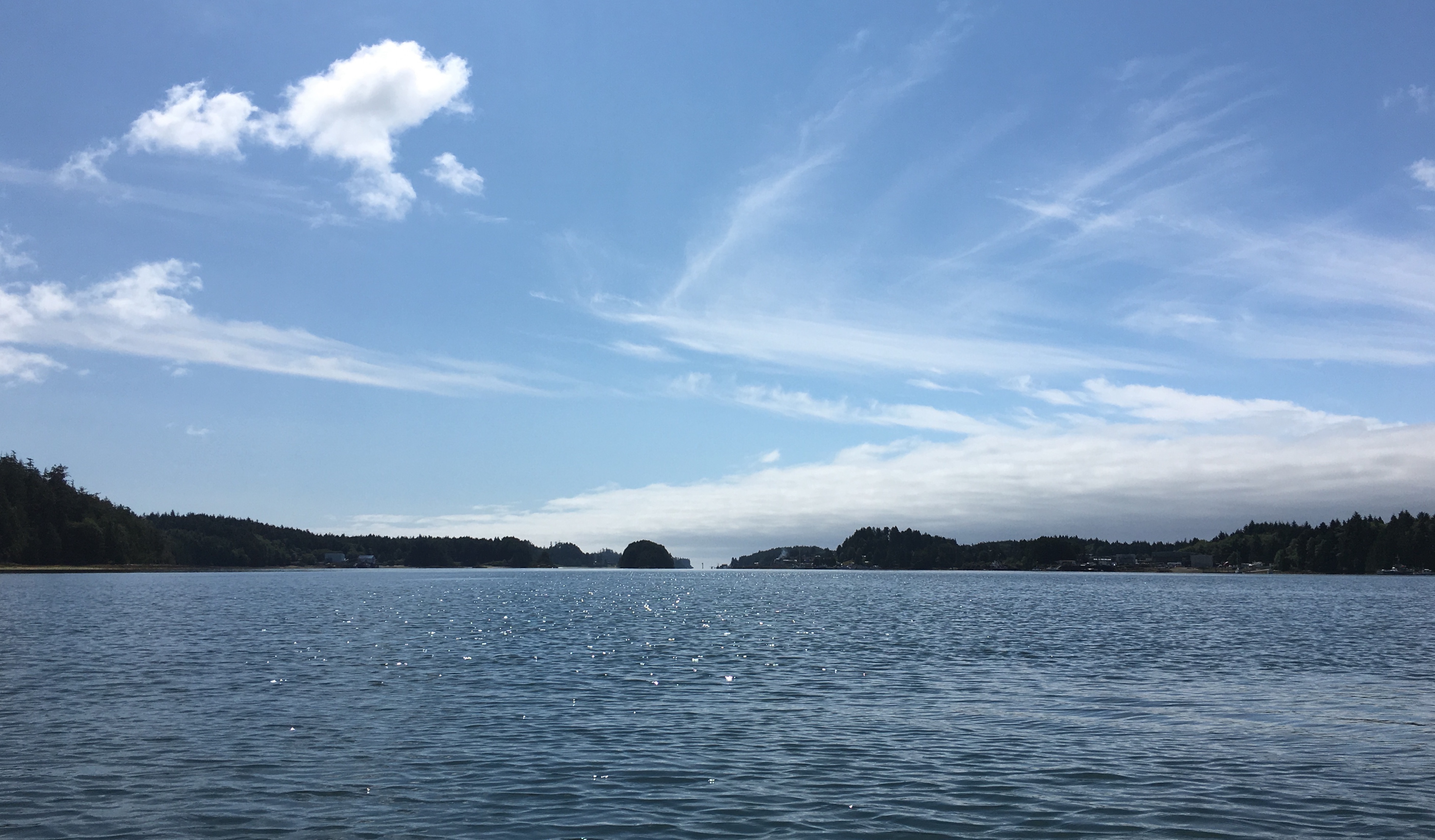
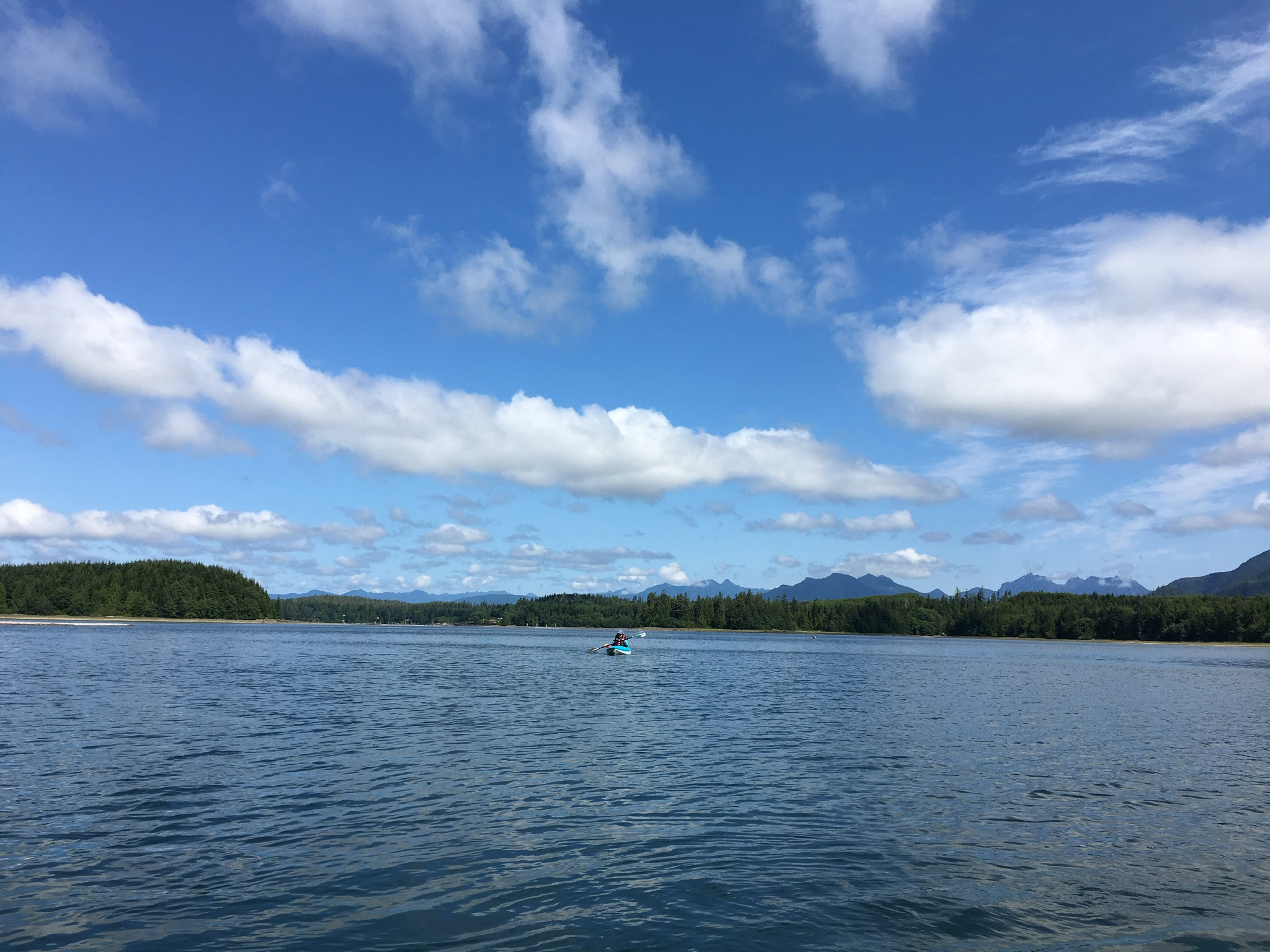
We spent a couple of very enjoyable warm and sunny mornings on the water, the first chance we’ve had this summer to bob about a bit, and very calming it was too. You know, if we needed calming.
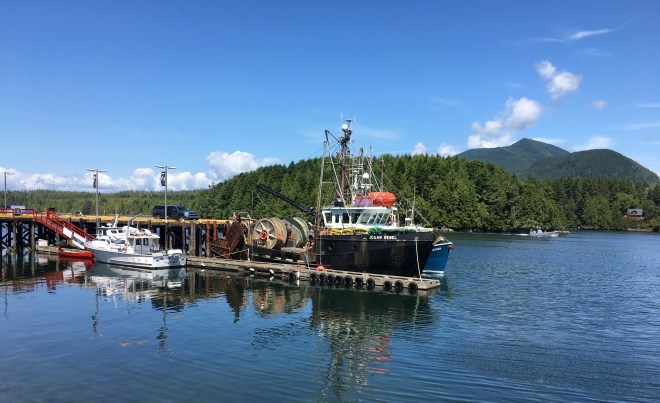
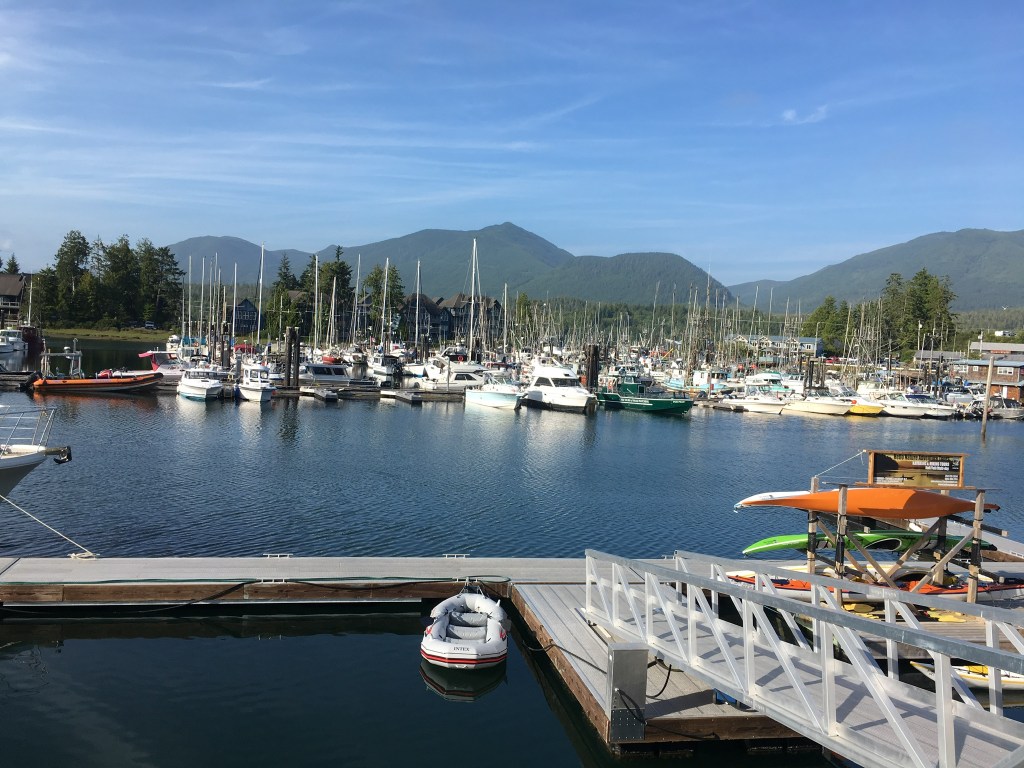
Winds were light, almost nonexistent – they tend to pick up into the afternoon out here, so a morning paddle is often best. Away from the relative hustle and bustle of the kayak launch – there is a small campsite nearby, and sometimes there are as many as four or five people – we found ourselves paddling along the shore at the foot of Mt. Ozzard, with splashing fish and singing birds for company, and no need for unicorns.
Paddling
I love the way a bald eagle floats across a line of trees. From the water, it looks like the eagle will disappear into the forest or over and out of sight, but often it’s the angle playing a trick on my eyes. Or it’s my eyes. The eagle flaps once or twice and then glides along just below the tree tops. Always a wonderful sight.
Splashing
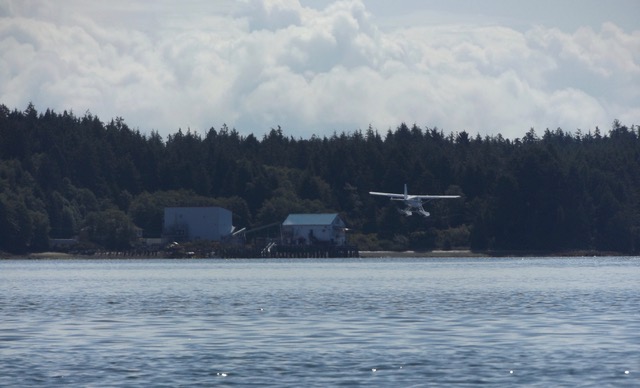
The fish were splashing, birds were singing, eagles were gliding and a floatplane was buzzing. Eventually caught sight of it lining up for a smooth landing further down the bay. They are noisy, but I have to admit to liking the buzz of a floatplane, and I think of the passengers inside, a lucky group who have just seen the coastal islands from high above on a sunny day.
Buzzing
I expect we’ll be paddling a few more times in the next little while. We plan to bring a lunch and haul ourselves out onto the shore somewhere, rest up on a log and eat before a bear chases us off. Or a unicorn. We’ve scanned the far shore and picked out a couple of likely looking spots. More to follow…
Unicorn friendly
Thanks for reading, here’s hoping for some light news days, and I hope you have a wonderful weekend!
Wandering around St. Andrews last week, in the middle of visiting friends and family in varying degrees of good health, it occurred to me I’m pretty much on the back nine.
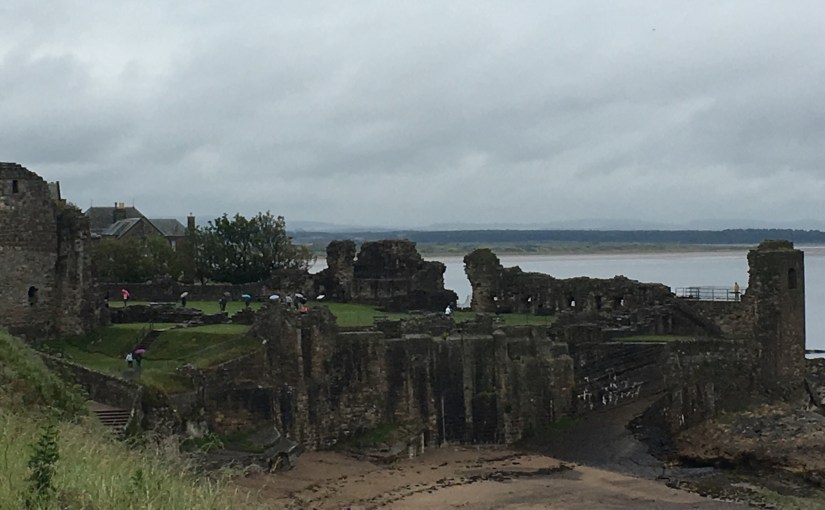
Castle
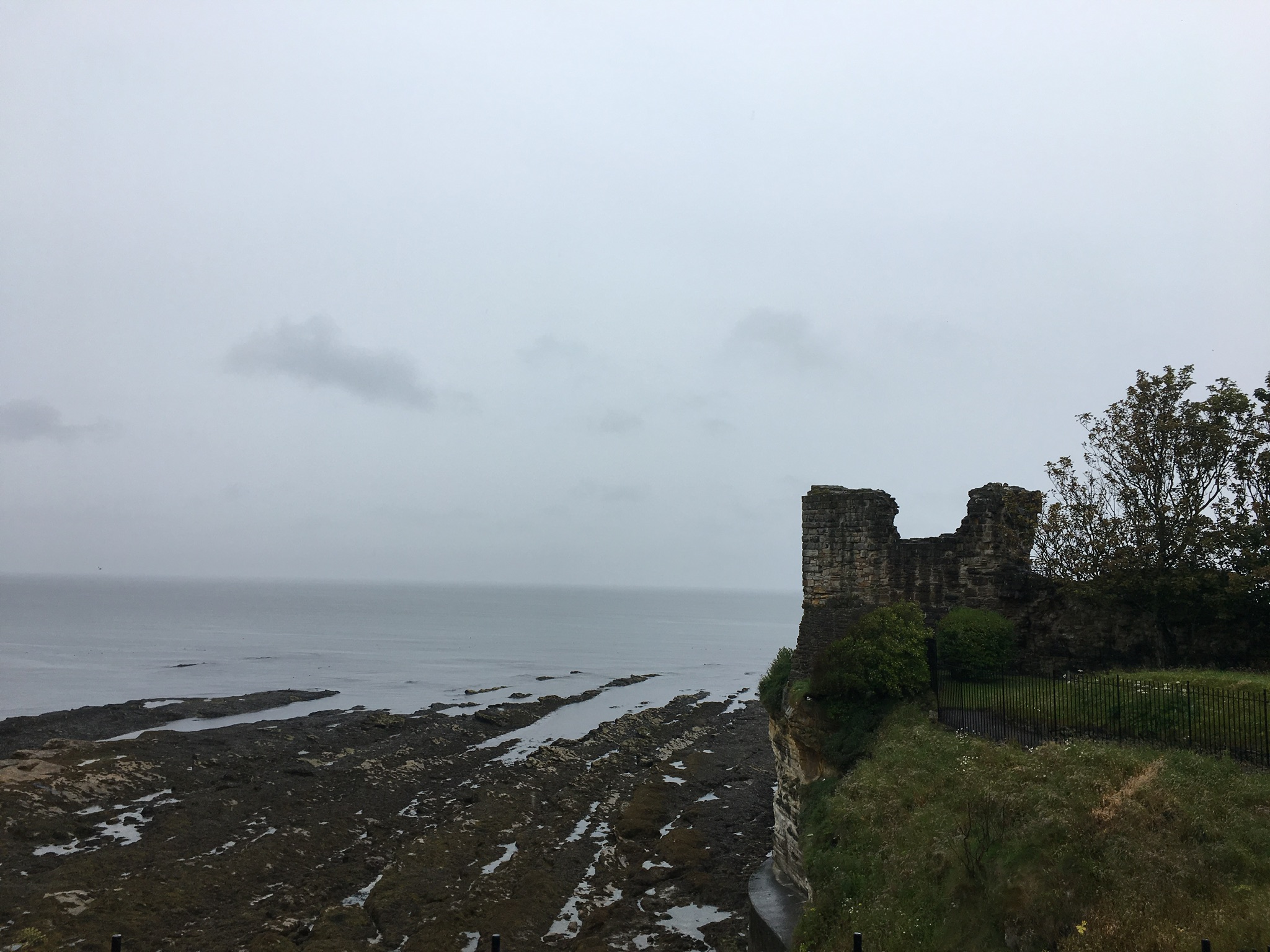
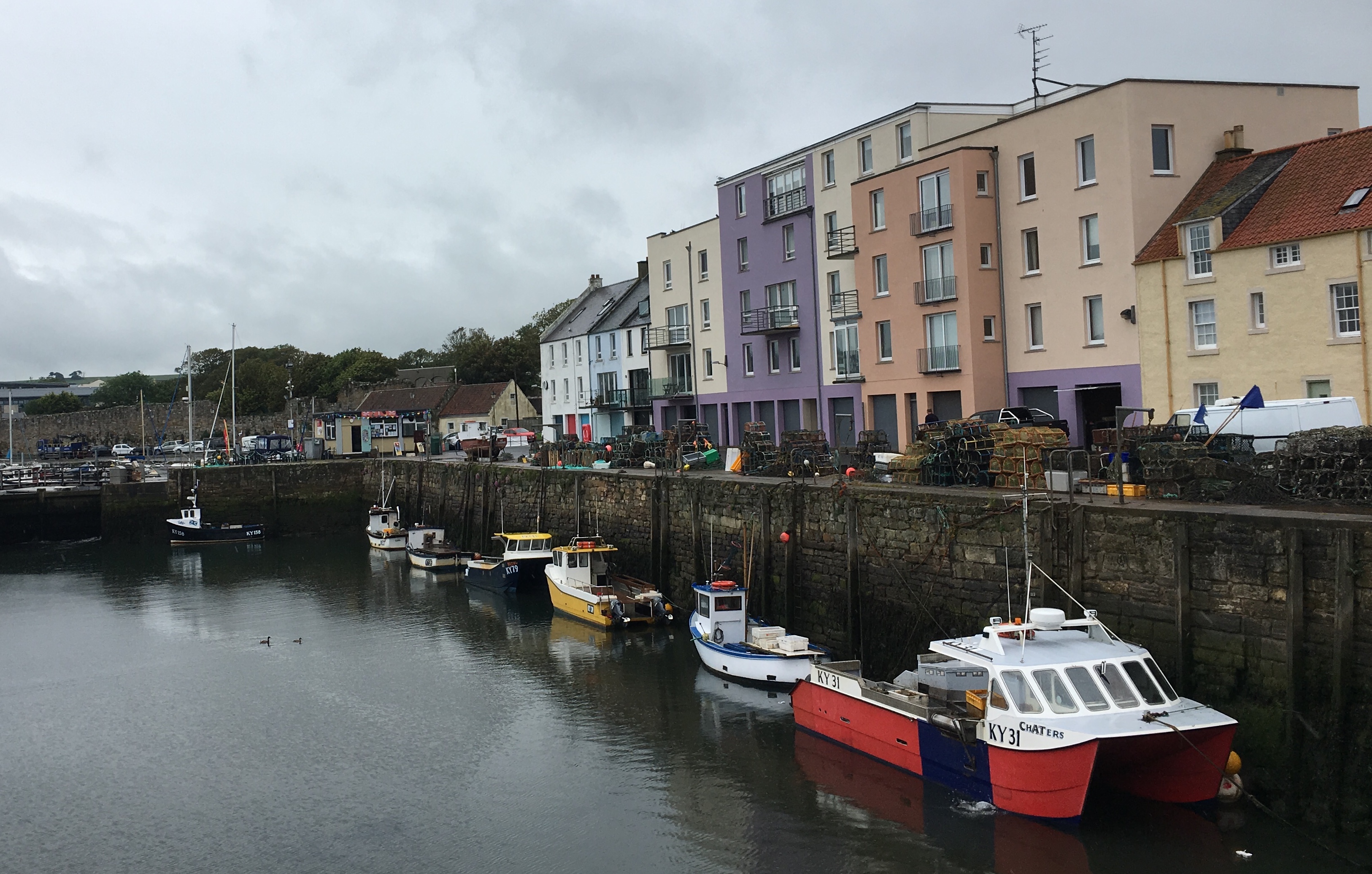
That’s a sobering thought, and enough to send you in search of the nearest microbrewery, but for once I managed to resist. St. Andrews Brewery, rest assured I’ll visit next time. Instead, I spent quite a number of happy hours walking in the rain, all around the edge of the Old Course, along the Eden Estuary, past the castle, the cathedral, the university buildings, and down to the pier.
University
I have to say, even in the rain, I found St. Andrews to be a pretty and genteel little town. I’ve no idea if it is full of golf snobs in the bars and clubhouses – I didn’t bother going in – but everyone I met and chatted to was very pleasant indeed. They had time to stop and share a few words with a damp and bedraggled tourist, which was nice.
Swilken Bridge
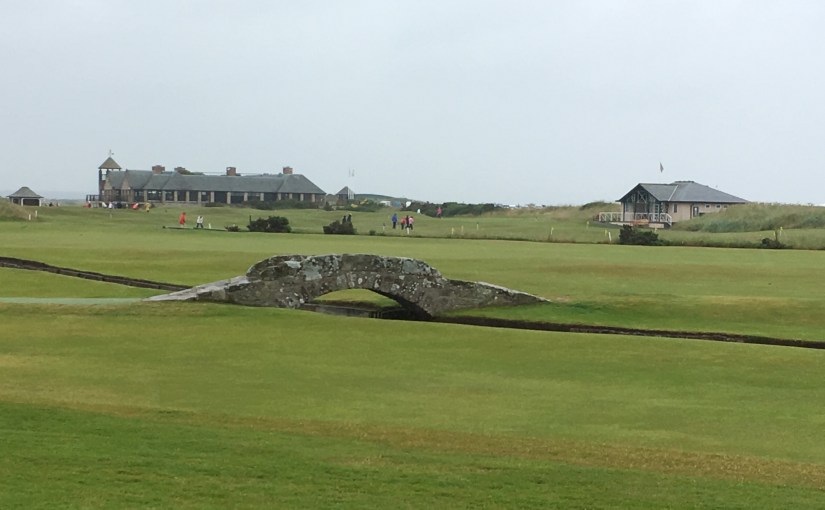
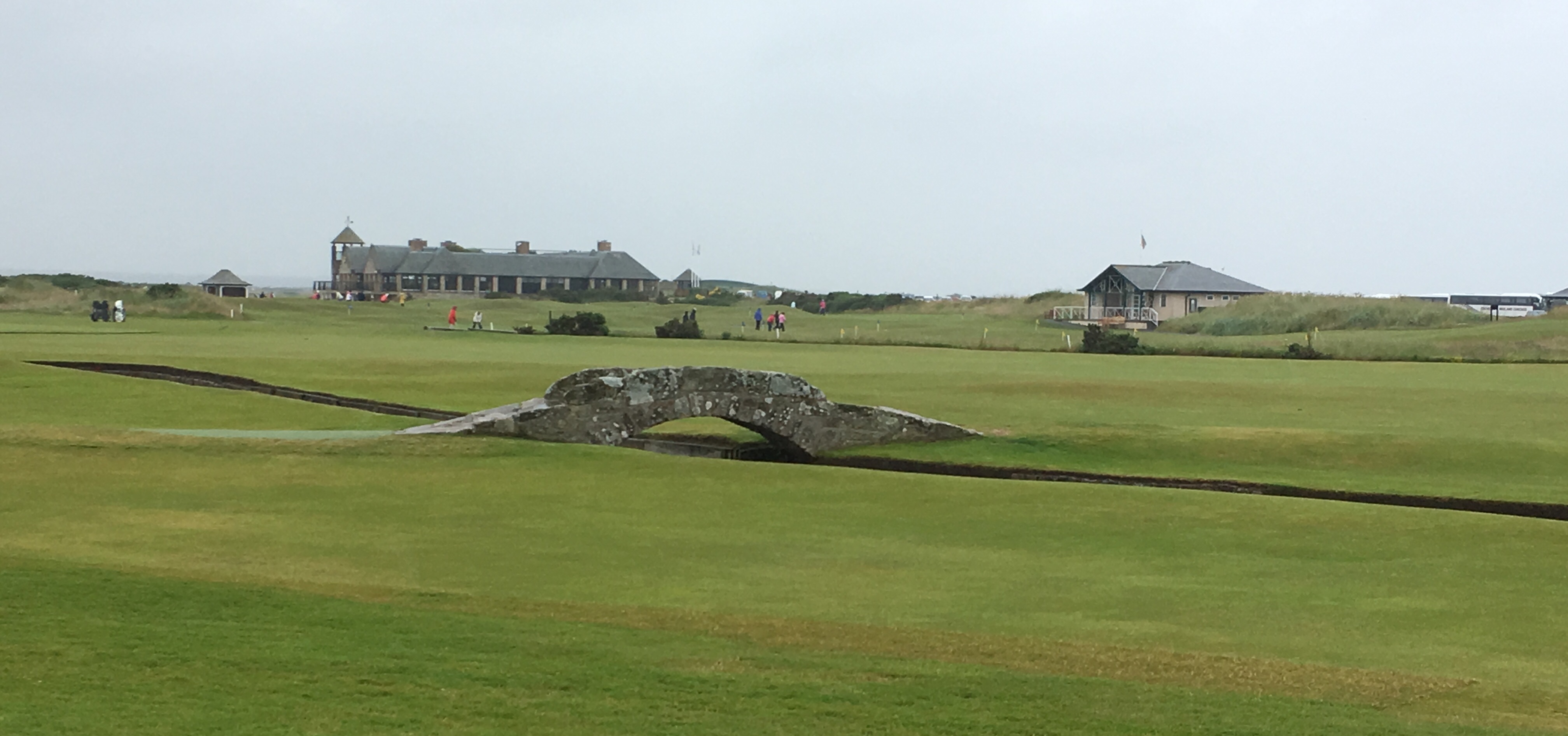
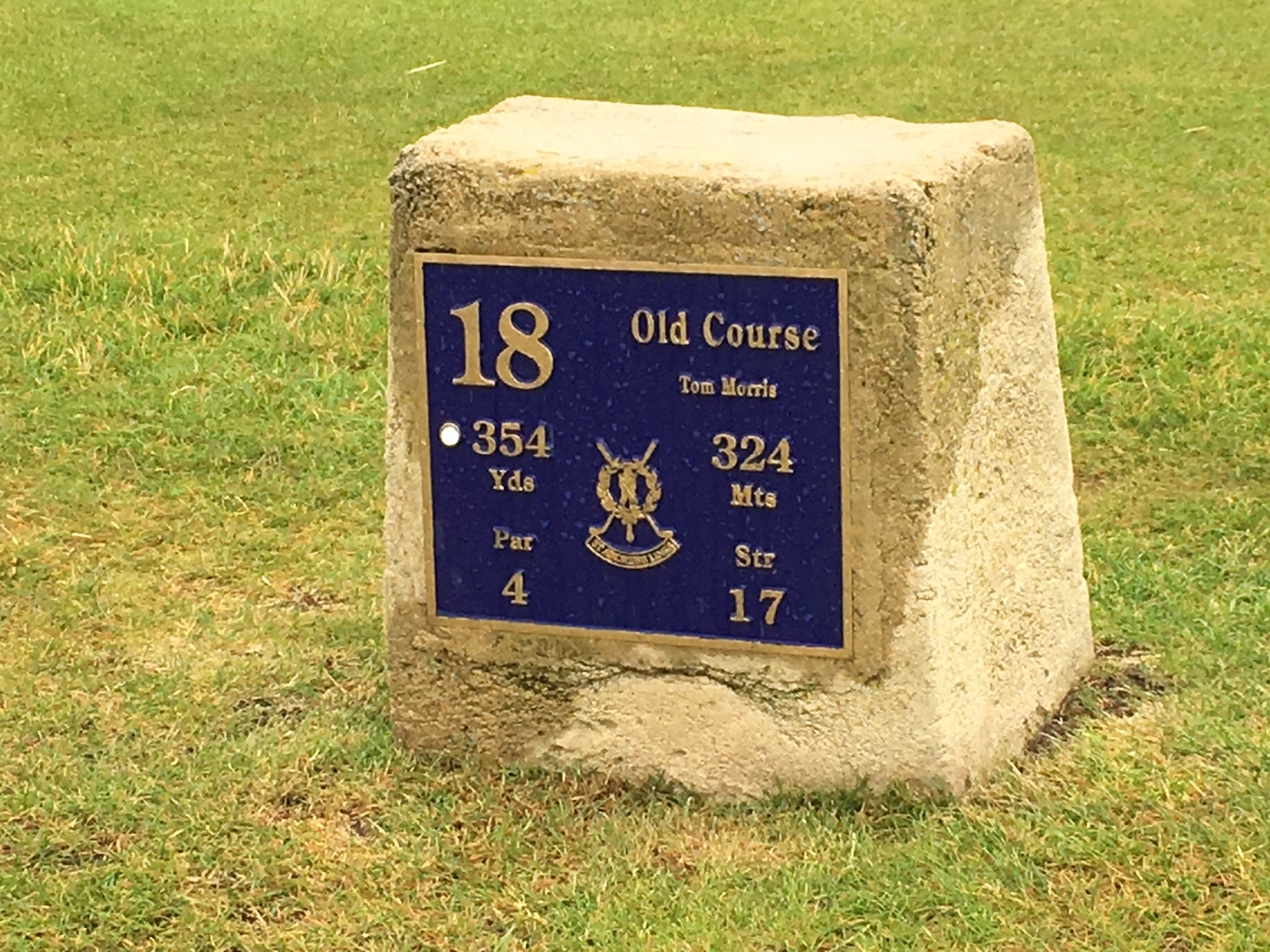
It’s been many years since I’ve tried to swing a golf club with real conviction, but I’ll admit to being absolutely thrilled seeing the bridge over Swilken Burn at St. Andrews. The course looks easier and smaller than it comes across on television. Many a fine golfer has been undone on this famous course, and long before reaching the 18th.
I saw excellent golf shots played as I mooched about, and I also saw many poor shots – shots I’d have been proud of. Maybe I should dust off the golf clubs and bring them with me next time? I’m on the back nine, perhaps I need to (re)take up a more sedate pastime?
From the pier
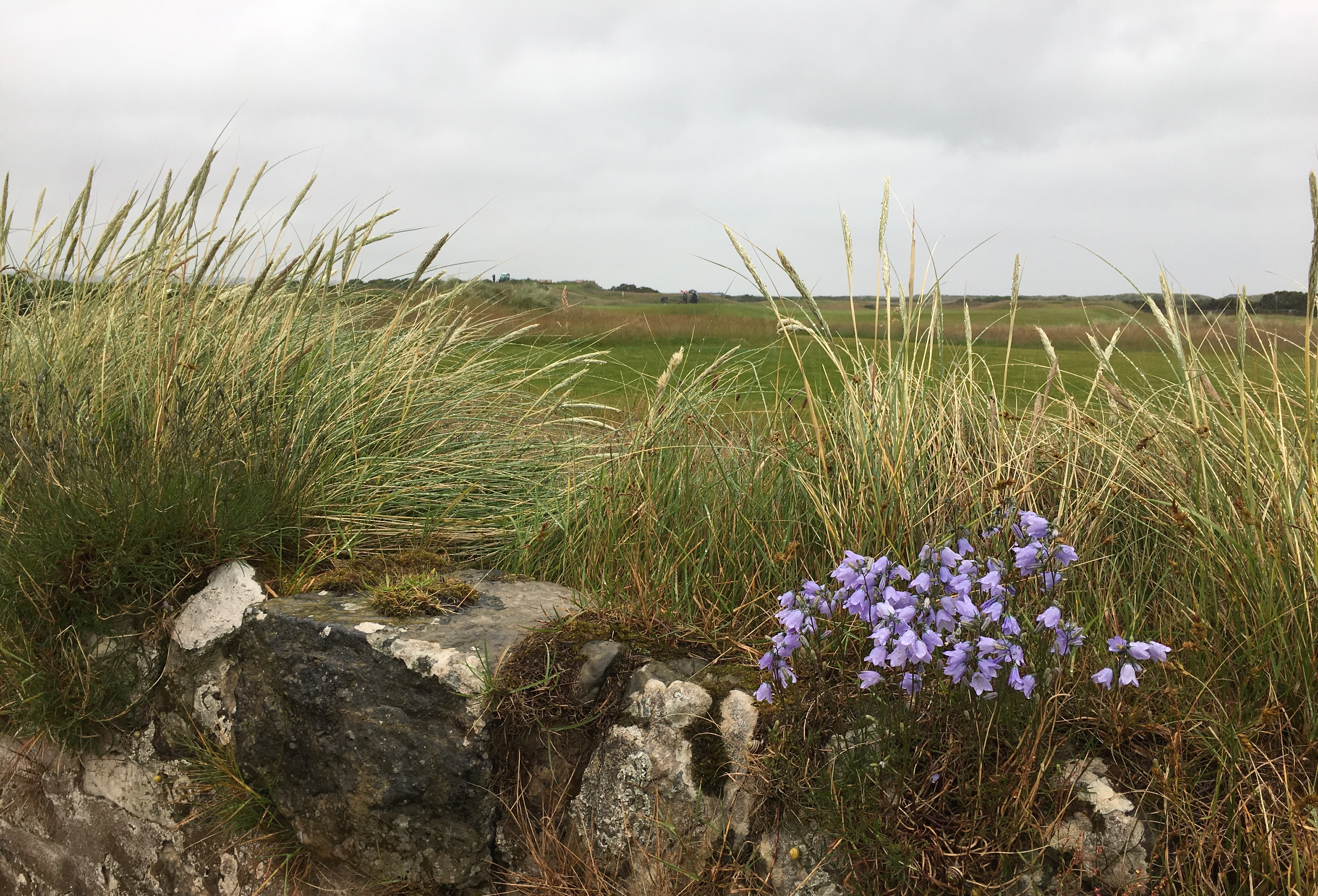
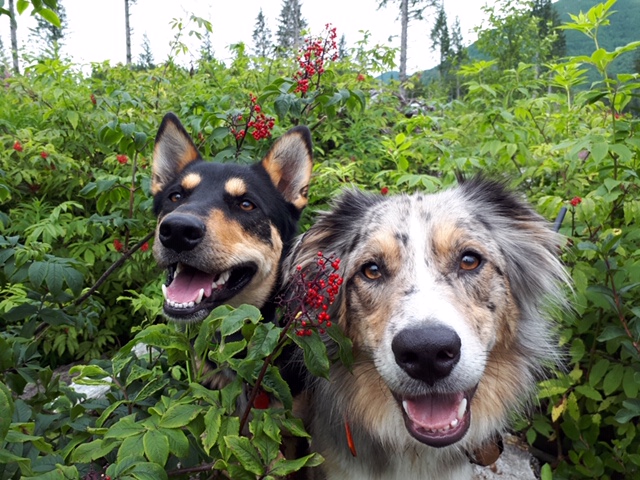
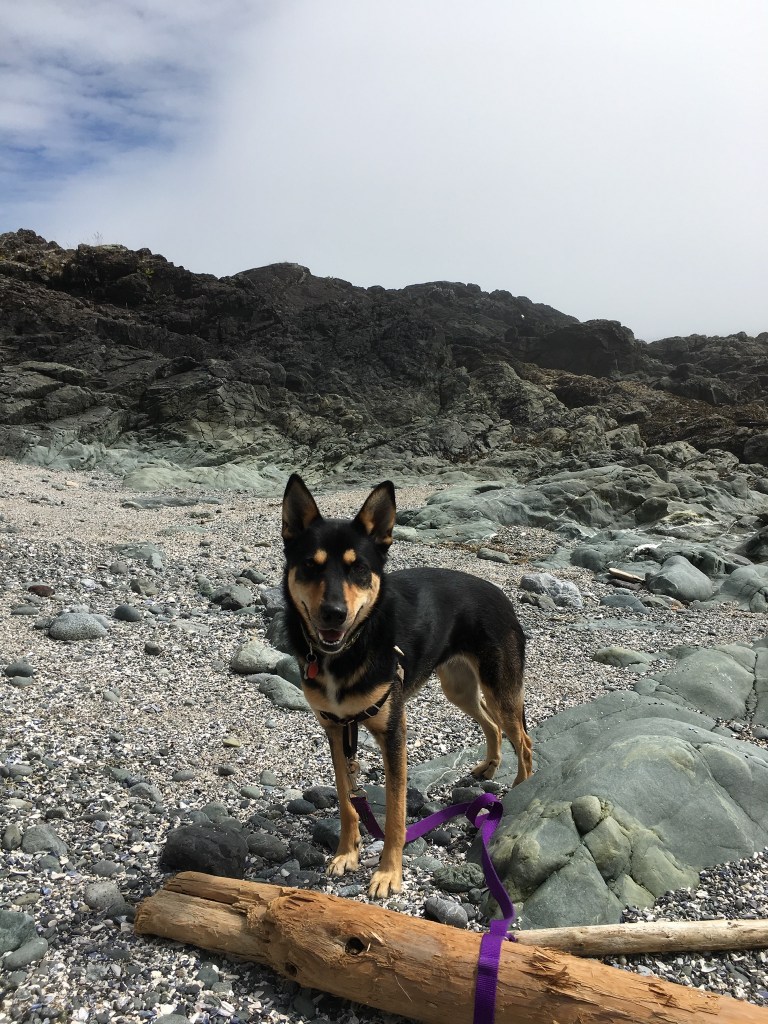
Best not – as I recall, my ability to remain calm under (golf) pressure wasn’t ever (ever, ever) a strong suit. Sport and comedy will have to remain the poorer for my early golf retirement. I’d rather be out not spoiling a good walk, and enjoy smelling the flowers. Almost every day when we’re out and about, Scout reminds me of that and I’d be wise to listen.
Smell the flowers
Being on the back nine isn’t so bad, if you can convince yourself you’re wiser for being older and that having hair on top of your head is overrated. We’re all headed for the nineteenth, might as well enjoy it, water hazards, sand traps and all, before getting there…
Close to the end!
Thanks for reading, and wherever you are on the course, I hope you have a wonderful weekend!
“Smell the flowers!” Scout and friend doing the right thing
With thanks to Teenage Fanclub for the post title. Never heard of Teenage Fanclub?! No? Try this: Ain’t That Enough?
I’ve been driving about northern Britain for the past week, windows down and enjoying almost sunshine and one or two rain showers. Then the windows go back up. They’re also back up whenever I start to sing, seems only fair to the people living here.
St. Andrews Castle
I never lived in northern Britain, but visited often over the years. I felt a little nostalgic for a place I don’t know that well, but I think it was more the music I’d chosen. My driving playlists had a northern leaning, and they made for better listening than the ongoing Brexit/Bloody Boris Johnson stupidity dominating the airwaves. Grrr.
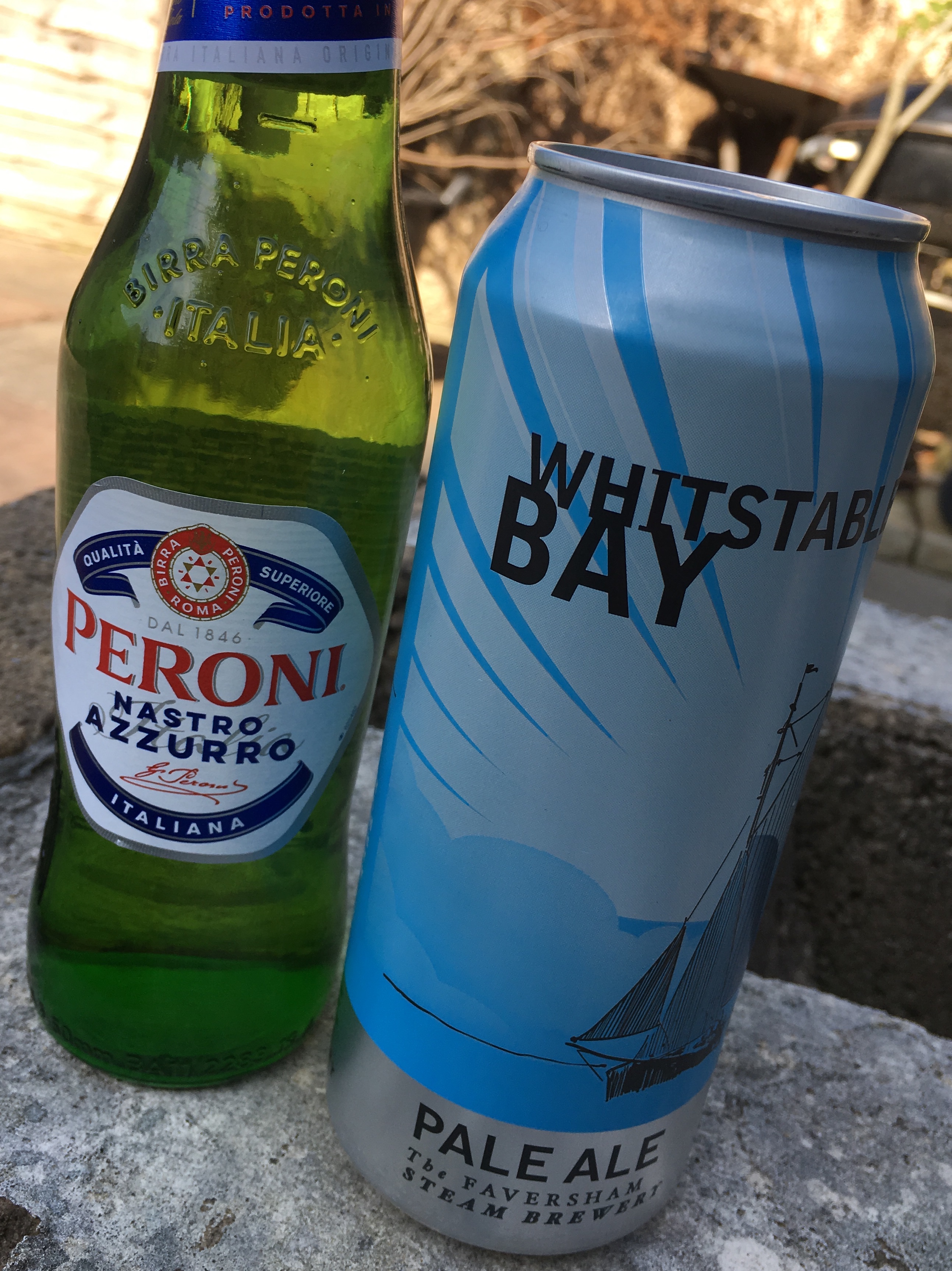
Where was I? Teenage Fanclub, excellent listening for the past three plus decades, and very appropriate for the Scottish leg of the trip. I remember an album review from over ten years ago that described them as “wizened” even then – they were younger than my age now! So this wizened listener enjoyed hearing the old songs, particularly from the Songs From Northern Britain album. “Here is a sunrise, ain’t that enough?” Well, yes, sometimes. The last three tracks on that album are even better than the opening three. Cue beer fuelled debate with sibling.
The pale ale was better, unless you asked my brother…
When I drove away from St. Andrews in the Kingdom of Fife earlier this week, having caught up with Junior McPlaidCamper, the weather was a touch misty – or I may have had something in my eye. Whatever the cause, I’m pretty sure I passed a sign for Angle Park. Let the memories from distant youth flood back. Angle Park? The bonus track on The Crossing by Big Country? Big Country! I was in a big country alright, with high hills and low mountains accompanying me through the Kingdom of Fife. What pleasant surroundings to find yourself in. The North Fife coastal path will call me back for further exploration. Never heard of Big Country?! Try this: Big Country – The Seer
Sunny St. Andrews
Junior is happy enough in St. Andrews, working hard in several of the hotel kitchens, and producing good food mostly made from local ingredients. We visited the store that provides ice cream to the hotel, and if you’re ever up there, can I recommend the pistachio? And the rum and raisin? And the mint choc chip? And the salted caramel? And pants with an elastic waistband? Yup, that’s how some of the evening went.
I get a brain freeze just looking
Before St. Andrews, I stayed a few days with younger Brother PlaidCamper, allegedly to help him out a bit as he recovers from a hospital stay. Mostly we sat in his sunny backyard, talking nonsense about books, movies, and music, and drinking a beer or two. Then more nonsense. He’s on the mend, and probably not because of my medical bedside manner…
Didn’t see a purple moose on this trip. Next time?
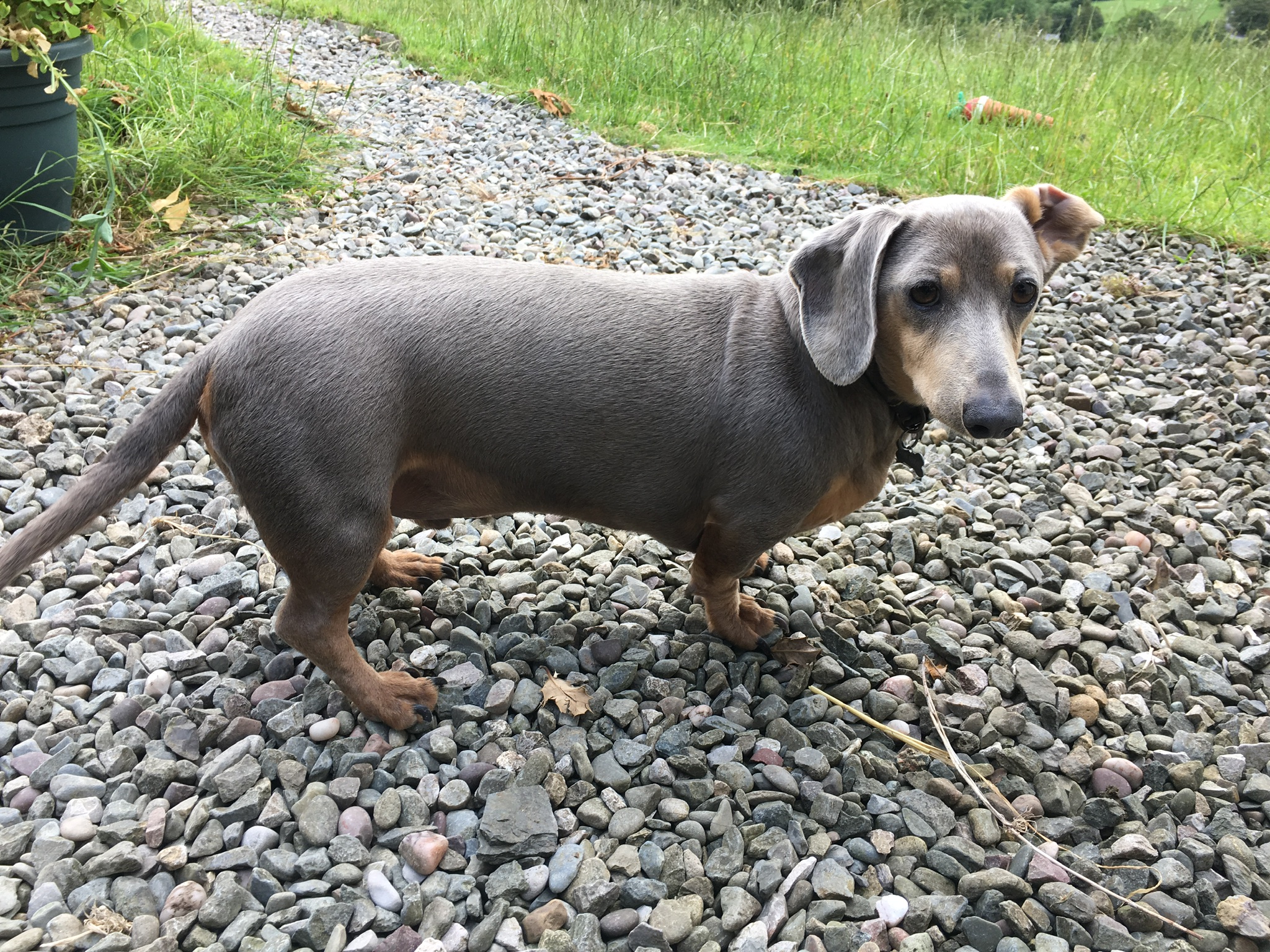
My final stop on the northern Britain tour was in North Wales, and an overnight with Pa PlaidCamper. He’s also on good form, pretending to be annoyed with Blue, his constant canine companion. They’ve sold the farm, and will be moving to a small hillside cottage located a few minutes away in the same valley. We drove past it yesterday, and it is in a beautiful location with spectacular views in every direction. If you can imagine steep green hillsides dotted with sheep and stands of trees all about, then that’s where they’ll be. Green and pleasant is an understatement.
Blue!Green! And pleasant.
Thanks for tuning in this week, and so to a final rousing song – if you know the words, feel free to sing along (I’ll roll the windows up): In a Big Country
There will be more about St. Andrews – and far less music, I promise – next week. Have a wonderful weekend!
Oh no, please don’t let this be a slideshow of an OldPlaidCamper summer vacation, akin to those endured by some in the 1970s. You remember, where your neighbours invite you round to see their holiday snaps projected onto a wall, and there’s a bowl of peanuts and a glass of warm flat lemonade for refreshments. Yikes/shudder. Slightly sweaty after writing that, a disconcerting flashback to a happy childhood. Stranger things in an earlier decade…
Mrs. PC took this excellent summer snap. I’m certainly looking my best here…
No, nothing like that. A brief post because I should be packing and finding my passport for the lightning trip to northern Britain starting Friday. Instead of getting that organized, we’ve been enjoying the start of our summer, spending time on the beach, on the trails and in the hammock. The hammock is thanks to US Brother PlaidCamper, sent to us after he stayed last summer and endured the disappointment of our little balcony sans hammock. It’s lovely to have, but sure does take up some space. A bit like having your brother visit. I’ll be paying it forward by visiting UK Brother PlaidCamper. I hope he has a hammock.
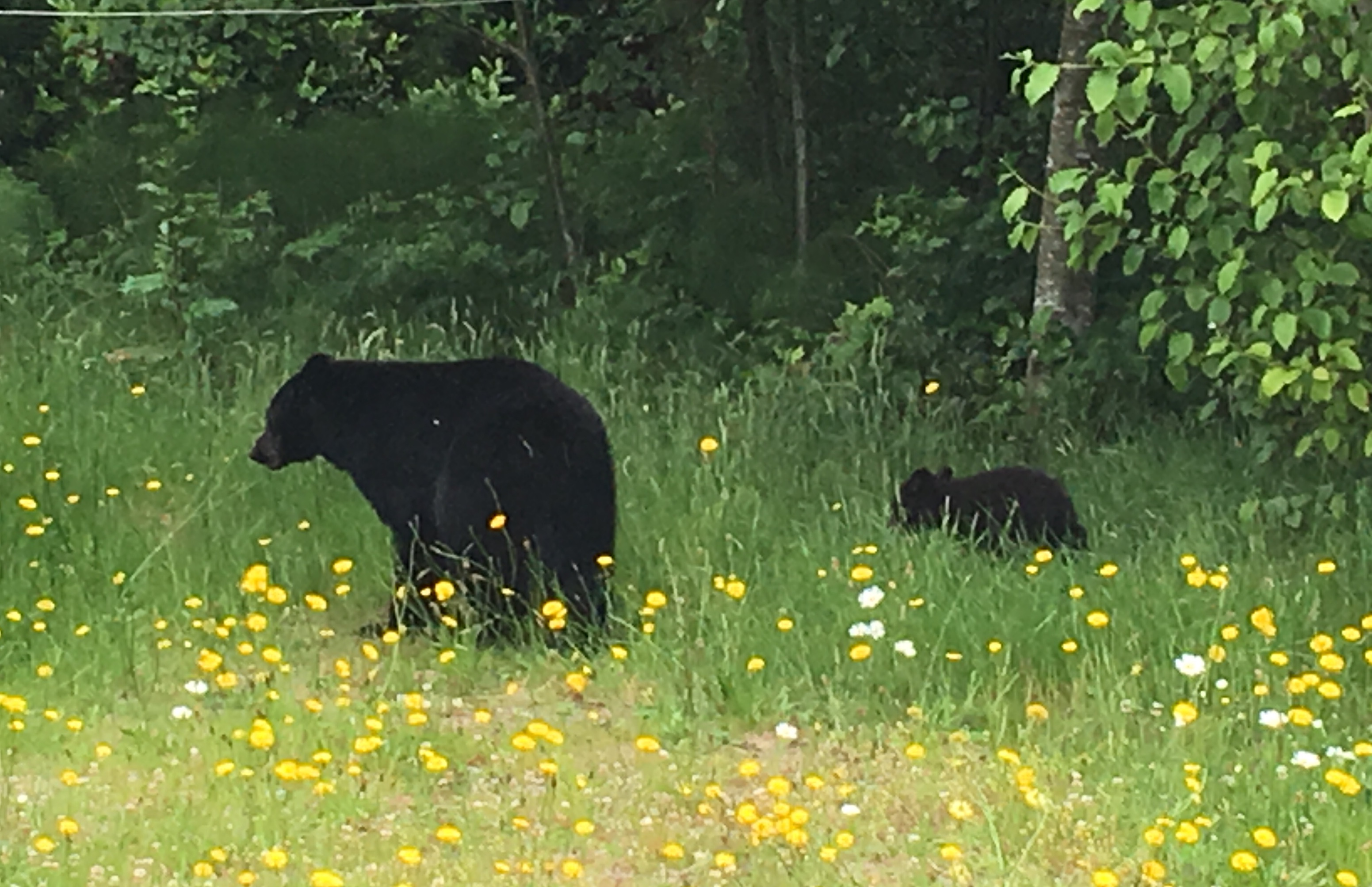
I’m assuming mama bear was close by – I didn’t hang around to find out
Bears and bald eagles have been our major wildlife sightings, as well as a wolf – yes, at last, a wolf! The wolf was spotted by Mrs. PC a couple of weeks ago, lurking outside a restaurant just up the road, a place called Howlers. It’s like the wolf knew. Then I saw it a few days later, again just outside Howlers. In the end, we’d convinced ourselves perhaps it was a large wolf-dog hybrid, as there are a fair few locally, and the animal we saw didn’t seem too bothered by the people about. On Wednesday, there was a public message posted, warning residents of a wolf in the vicinity of Howlers, so a wolf it probably is. I wish I’d been able to take a photo. Maybe I’ll head over to Howlers after writing this. They do a good veggie burger, decent fries, and they have Tofino blonde on tap – a good evening even if the wolf stays (wisely) away! Displacement activity from packing? Yup.
Warmer than it appears
The weather has generally been gusty, grey and dry, with occasional bursts of sunshine in between low cloud, some murk and almost fog. Never too cold, and never too hot, always comfortable enough when we’re out and about. And comfortable enough for some hammock time.
“Forget the hammock – we have the beach!”
The snaps included with this piece were all taken in the past week, and if you’re desperate for something to do this weekend, please feel free to use them in a wall-projected slideshow presentation – viewing enjoyment is enhanced with flat lemonade and a bowl of peanuts…
It’s almost Canada Day already?! Monday July 1st, if you were wondering…
Sunny ways!
Canada! It’s not a perfect country, not by a long way, but in the years that we’ve lived here, it’s always seemed like a country striving to improve. Much more needs to be done related to environmental concerns, and more to eliminate poverty and raise the standard of living for all residents and citizens. There is a challenge in achieving a successful and sustaining economy that isn’t simply a resource extraction economy. Why further erode the land, air and water that sustains us just to make more money than a person could possibly need, and at the health expense of fellow citizens?
Not always sunny…
Warts and all, I can’t imagine living anywhere else, and Canada Day is a time for us to feel grateful about being Canadian. Our citizenship here is something we don’t take for granted.
It can sometimes seem the world is falling into madness, what with demands for walls, the deliberate undermining of alliances that were originally made to prevent conflict, and what feels like an unhappy lurch to the right and a tendency to blame everyone else at the same time as failing to take responsibility or action for planetary woes. Goodness, long sentence there. In that light, Canada makes a sort of sense to me. As I said, not perfect, but not likely to cause global ripples – or worse – due to destructive childish tantrums designed to fulfil the narcissistic need for attention at any cost. I’d better stop with these long sentences, and the content, not good for anyone’s wellbeing.
Medicinal, take after reading news…
Yes, enough of all that. Every day is Canada Day around here, and that makes me (a bit of a curmudgeon from time to time) smile. All the photos are images from the past week, and they have a Canadian flavour – mostly because they were taken in Canada!
Canadian flavour – it has been so dry, we resorted to breeze blocks for the salmon berry stakes! Rained the day after, but wonderfully sunny for lunch in the school garden.
If you’re Canadian, know a Canadian, have been to Canada, want to live in Canada, or simply enjoy hockey and maple syrup, then happy Canada Day to you for Monday!
Thanks for reading, and I hope you have a wonderful weekend!
It’s been a busy end of school season wrap up, with exams, transition plans, and celebrations to mark achievements in an academic year well spent.
It’s a tough gig
Yesterday was a beach day, with students, families and teachers having a few hours down by the water, some play time and easy company before all leave and head off into summer, a year older and a year wiser. Certainly older…
Learning!
I’m looking forward to a busy and relaxed summer, if both can happen at the same time. The twin track approach will see me back in Blighty for a swift visit, a chance to catch up with one brother, one father and one daughter in little more than a week. Then it’s back to the island for a few weeks, with beach walks, paddling, maybe a few tent nights if we can find some quiet spots, and, fingers crossed, some time learning to build log cabins in remote parts. Mid August, we’ll be on the road, nothing too long, for a visit to Alberta, just to be sure friends, lakes, mountains, and a few big city haunts are all still there.
Lining up, ready to go
I love being in education, and especially in my current position, finding myself working in schools, the community and (best of all, I can’t lie about this) out in the backcountry. If I ever found myself in an occupation that demanded I work for pay over the summer months, then all would not be well. I did fake being a chef for a couple of summers when we lived in France – I was younger, leaner and hungrier back then – but those few years aside, I’ve had summers off, and for that I’m most grateful! (Apologies to readers who do work summers, and a tip of the hat – like that helps…)
A student has a new young pup – how cute?!
Keeping it brief, as time is short this week, having spent longer than usual days preparing for and enjoying an education celebration. This was a lovely evening where many citizens and residents over the bay were recognized for educational achievements – from pre-school through to post secondary and then all manner of lifelong learning.
With a tip of the hat to this coming Sunday, let’s say the photographs and some content this week is slightly Dad biased. That said, you don’t have to be a Dad to enjoy old trucks and good beer. My Dad does enjoy old Land Rovers and Range Rovers, and he will drink a beer if there’s nothing else, but he’s more partial to a full bodied Rioja.
Full bodied
Before we moved away from the UK, each summer my Dad, brother and I would meet up for a few days and play three rounds of golf. That’s not quite true. My Dad would play golf – he’s a very good golfer, toyed with the idea of turning pro – and my brother and I would go for a long walk trying to find our errant golf balls. My Dad was referee/coach/guidance counsellor/man mercilessly taking the piss out of our monumental sporting struggle. My brother and I were playing to win a penny. It’s true! We even called it the penny trophy! (I’m not the current holder…) My Dad had tremendous patience in the face of our (mostly my) inability to remotely master the game, and if you could have seen how bad we were (I was), his restraint has to be admired. We’d enjoy a glass or two of something good after each round, recounting the highlights and lowlights, and I do miss those fun summer meetings, even if I was often a miserable so and so on the course. I know, that’s hard to believe!
Summer 2019 release – cheers!
Anyway, cheers to my Dad, and to Dads, and cheers to everybody, because it’s fun to raise a glass if you’re so inclined, and I will for almost any reason, but maybe not on a school night.
School nights? Not too many of those between now and the end of the academic year! Lots to keep us busy between now and then. I was at a celebration of Nuu-Chah-Nulth learning earlier this week, one where some beautiful murals were unveiled and blessed at a high school. A collaboration between local indigenous artists and high school students, the three paintings were stunning depictions of local history, nature and culture. To see so many people of all stripes come out and celebrate, enjoying the artwork, singing, drumming and dancing was wonderful to see. The accompanying feast was also a highlight, with multi-generations present.
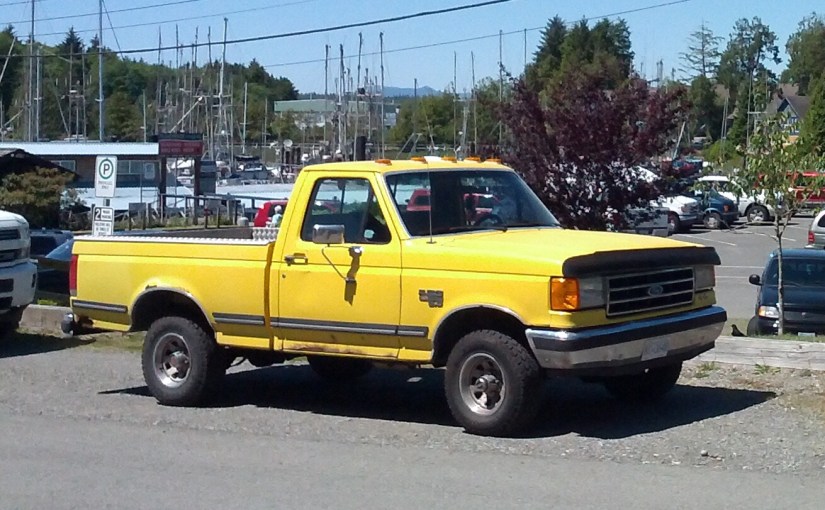
On the way home, I saw this green truck parked up, and I had to stop and take a picture. They do look good in green, don’t they? It probably isn’t what’s meant by going green. Old man dreams?
Going green?
At a cafe the other day, Mrs. PC spotted a weighty tome she thought I’d like to look at. It was a picture book – she knows me so well – with great photographs of pick up trucks past and present. Perhaps her thinking is if I look at the pictures, that’ll be more than enough to be going on with, no need to actually buy an old wrecker. Good strategy, bound to work, and anyway, the real thing is too expensive to maintain. Far better to buy a cup of coffee at that cafe every now and then, and look at the book.
Low maintenance? I think so!
The following day, we were leaving the grocery store when I spotted this old pink-wheeled delight. Imagine being the proud owner of a truck like this. I bet it doesn’t need that much maintenance. After all, it’s been going this long, it’s bound to have many years left in it. Way more fun than looking at a book. Probably even has cup holders?
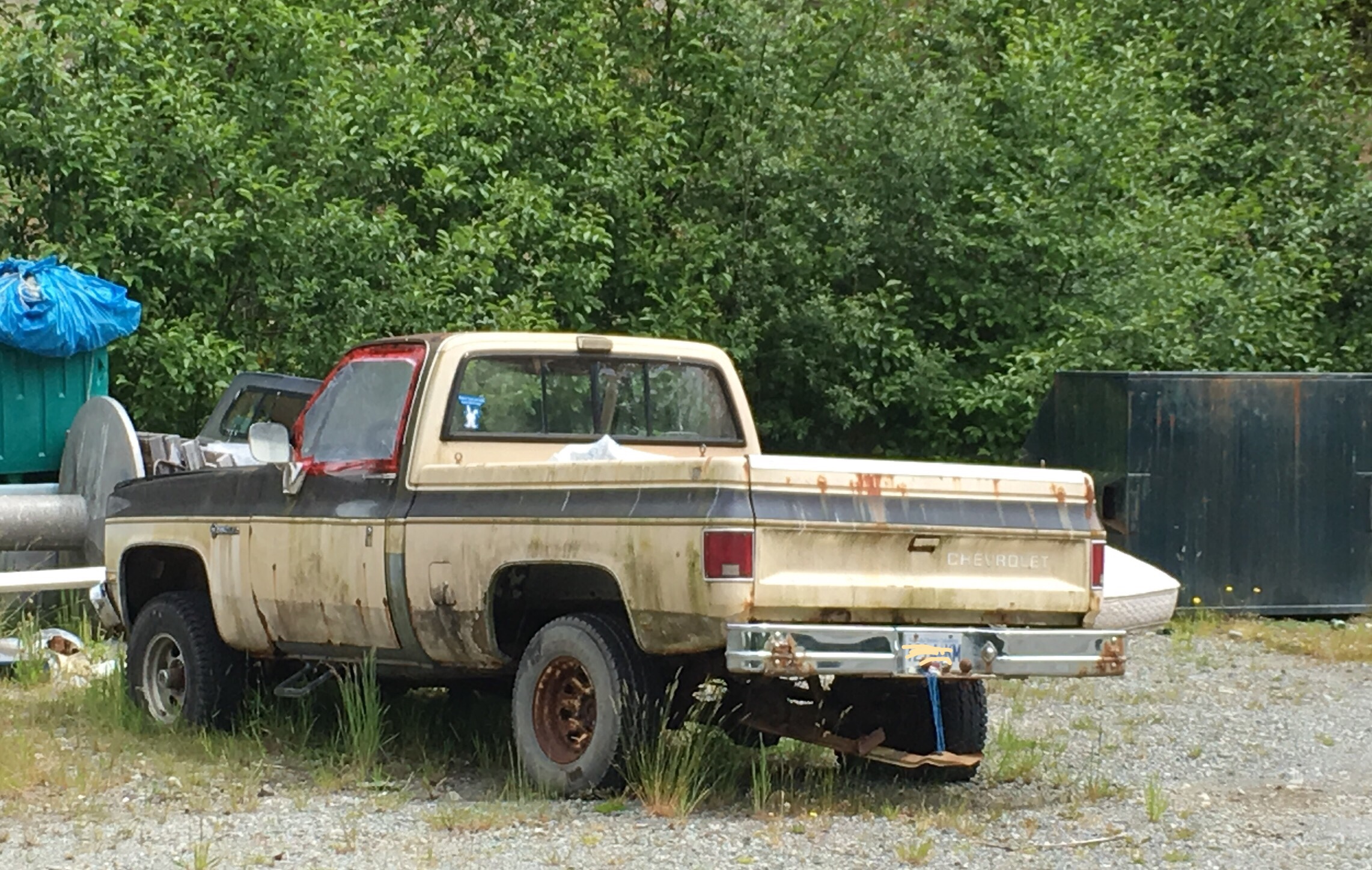
I’ll leave it here for now, as I’ve got to head over the bay, put some hours in on the forthcoming education celebration we’ll be enjoying next week. You’ll be interested to know I always slow down when I’m passing this beige beauty:
Let’s head away from the coast and into the interior this week. A title borrowed from Wallace Stegner, a recommendation to read the Stegner title, and some Saskatchewan memories. What brought this on? Friends from Alberta emailed us last week, catching up on recent events and checking in to see if we had plans to be in Alberta over the summer. Likely yes, and I hope we can mesh our summer schedules and meet up face to face. We’ll have to time it so we see them before or after their planned camping trip to Saskatchewan. Saskatchewan!
I have fond memories of a Saskatchewan road trip and cabin stay we did during our second summer in Canada. Big skies, long distances, empty roads, and the biggest bugs ever. Ever! Also, the week we had in our cabin provided me with some of the most restful sleep I can ever recall. Ever! It was quiet and the backroads cycling was easy. Apparently, parts of Saskatchewan are quite flat. That summer had been rainy just before we set off, so the prairies were a vibrant green and gold – and the abundant insect life was big and bold. The dragon flies were enormous, or so it seemed when cycling through them.
The following year we camped a few nights in the Cypress Hills area, a windswept and beautiful location straddling the Alberta-Saskatchewan border. We had a fun time camped down by the water, aside from some of the biggest mosquitoes ever. Ever!
A different cabin
So what about the title of the post? Wolf Willow? It just so happens I’ve been reading Wallace Stegner’s remarkable book about plains life around the end of the nineteenth and start of the twentieth century. It is a spellbinding account of the trials and tribulations of settlers heading west. It also acknowledges the terrible devastation wrought by those early settlers, on people and place.
Storms, wind, fire, hard winters, dry summers, near starvation, genocide and environmental destruction – this is not a cheery account of that life and those times. Yet Stegner loved the several years he spent there as a child. His account of being a “sensuous savage” running pretty wild with his peers is quite a contrast to the experiences of many children today. There might be an argument made for the rough and tumble of his childhood being a more meaningful experience. Many true and a few tall tales are told, the secondary heading of the complete piece being “a history, a story, and a memory of the last plains frontier.” He had many exciting and striking memories, that’s for sure.
Tough country
There is much on the nature of nature forging identity and character, how a landscape can define a person, even years after they have moved on. For all the tough times and challenging living conditions, Stegner has a real love for his brief – yet formative – years on the prairies, his family scrabbling to survive on what felt at that time like the last frontier. Or the end of the last frontier in North America.
There are any number of wonderfully descriptive prairie passages in the book. The wind is a constant companion:
“Across its empty miles pours the pushing and shouldering wind, a thing you tighten into as a trout tightens into fast water. It is a grassy, clean, exciting wind, with the smell of distance in it, and in its search for whatever it is looking for it turns over every wheat blade and head, every pale primrose, even the ground-hugging grass. It blows yellow-headed blackbirds and hawks and prairie sparrows around the air and ruffles the short tails of meadowlarks on fence posts. In collaboration with the light, it makes lovely and changeful what might be otherwise characterless.”
No need to hurry
The central part of Wolf Willow tells the story of a cattle drive undertaken just as winter approaches. This fictional account is utterly compelling, a tremendous piece of writing about fighting to stay alive in a snowstorm and do a job of work. The main character is a fresh faced romantic recently arrived from England, and he is desperate to be recognized as being stoic and hardbitten like his work colleagues. A few days of driving cattle in plummeting temperatures forces a reassessment of what he saw as a romantic life, and as for achieving the stature he believes his colleagues have? Well, you’ll have to read Wolf Willow to find out. If you do, you won’t be disappointed, although you might find some of the attitudes and prejudices from the time of writing a touch off putting. Maybe treat it as a history lesson on past social attitudes, and then enjoy the tales told.
A welcome thaw
From when we were road tripping in Saskatchewan all those years ago, a strong memory is of how friendly people were. One morning we found ourselves in the tiny town of Tisdale, a few hours northeast of Saskatoon. (As an aside, I delight in writing or saying Saskatoon or Saskatchewan. Even better, Saskatoon, Saskatchewan!) Anyway, we were lost, which is hard to do in a small rural town, but soon knew where we were when we inadvertently turned onto a street and found ourselves driving at the head of a parade. Oops. For a few minutes, we headed the floats and marching band. Those friendly townspeople clapped and cheered as we drove on up the street, and was I ever happy to turn off as soon as possible. I’d love to visit again, but I don’t want the townsfolk feeling pressured about putting on a parade…
Captivating country, and never characterless
Ah, Saskatchewan! Land of Corner Gas, a show that told us all we needed to know before heading out on that particular vacation. Corner Gas shows that life has changed on the plains since Stegner’s day! I have to say, prairie life is still a tough business, maybe not Stegner period tough, but there is something so attractive about it nonetheless. Honestly, I’m as hopelessly romantic about it as that young Englishman in Stegner’s story…
Wolf Willow was one of the first prairie shrubs I learned to recognize when we moved to Alberta. One freezing November evening, a kind botanist walked me through a river valley in the prairie edge lands as preparation for a school field trip. The Wolf Willow and Red Osier Dogwoods were a delight, each standing out, even in failing winter light. I’ll be honest, it’s easy to remember a plant with a name as captivating as Wolf Willow. (A quick search earlier revealed it isn’t a willow at all, but that’s okay…)
A good read (Image from Goodread.com)
I think I’ll leave it here, otherwise there’s a danger I could meander on like a slow and muddy river flowing in a summertime prairie valley. In Saskatchewan!
Thanks for reading, and I hope you have a wonderful weekend!
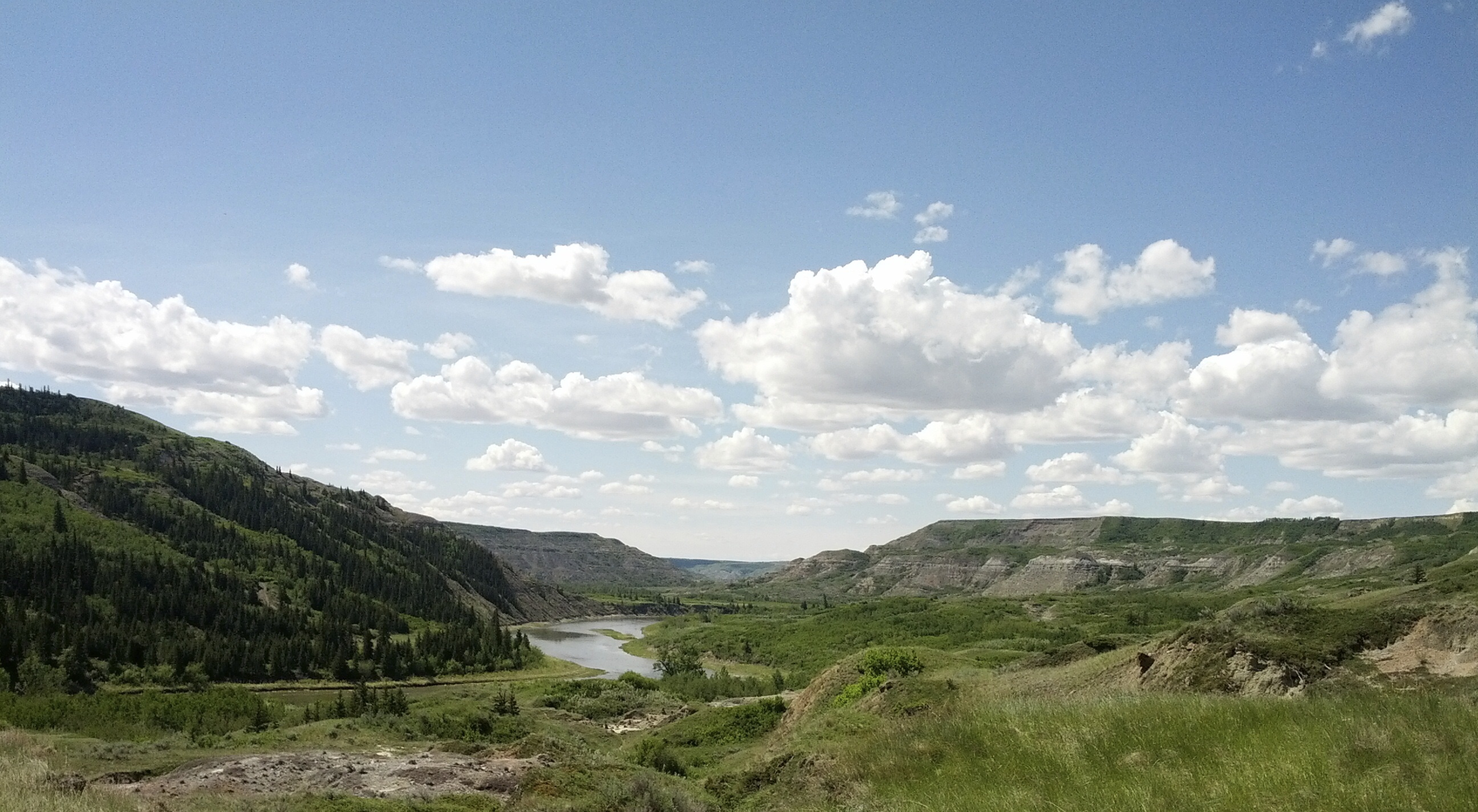
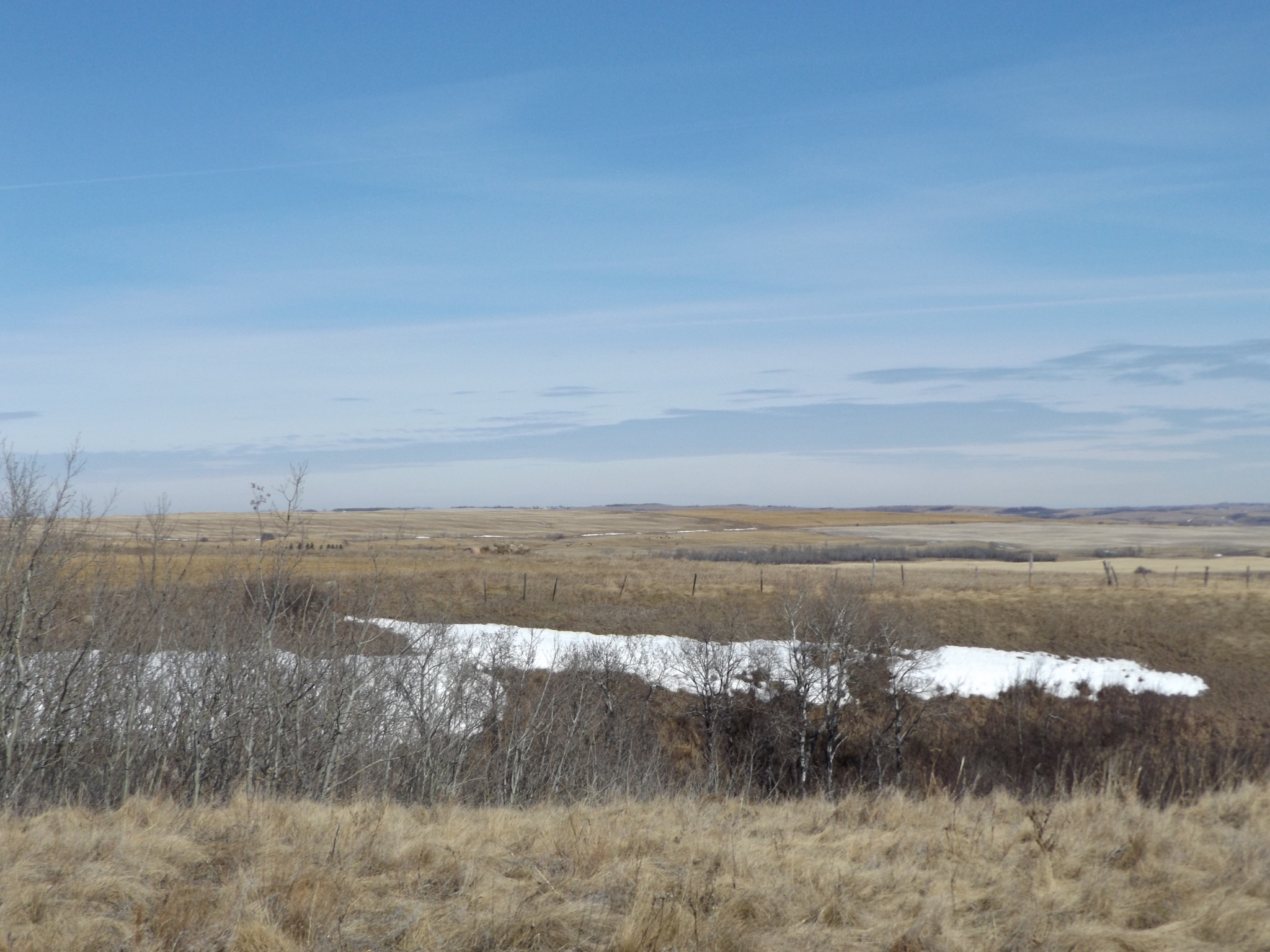
All the photographs this week are from Alberta prairie visits in previous years. I have photographs from our SK trips, but couldn’t find them this week. Maybe we need to plan another SK trip…
No, we haven’t headed back to Alberta – no plans to visit before the summer – but I am feeling a touch saddle sore. A short but very fast post this week. You’ll have to be quick to catch this one as I race by in a blur…
I raced very slowly down this lane
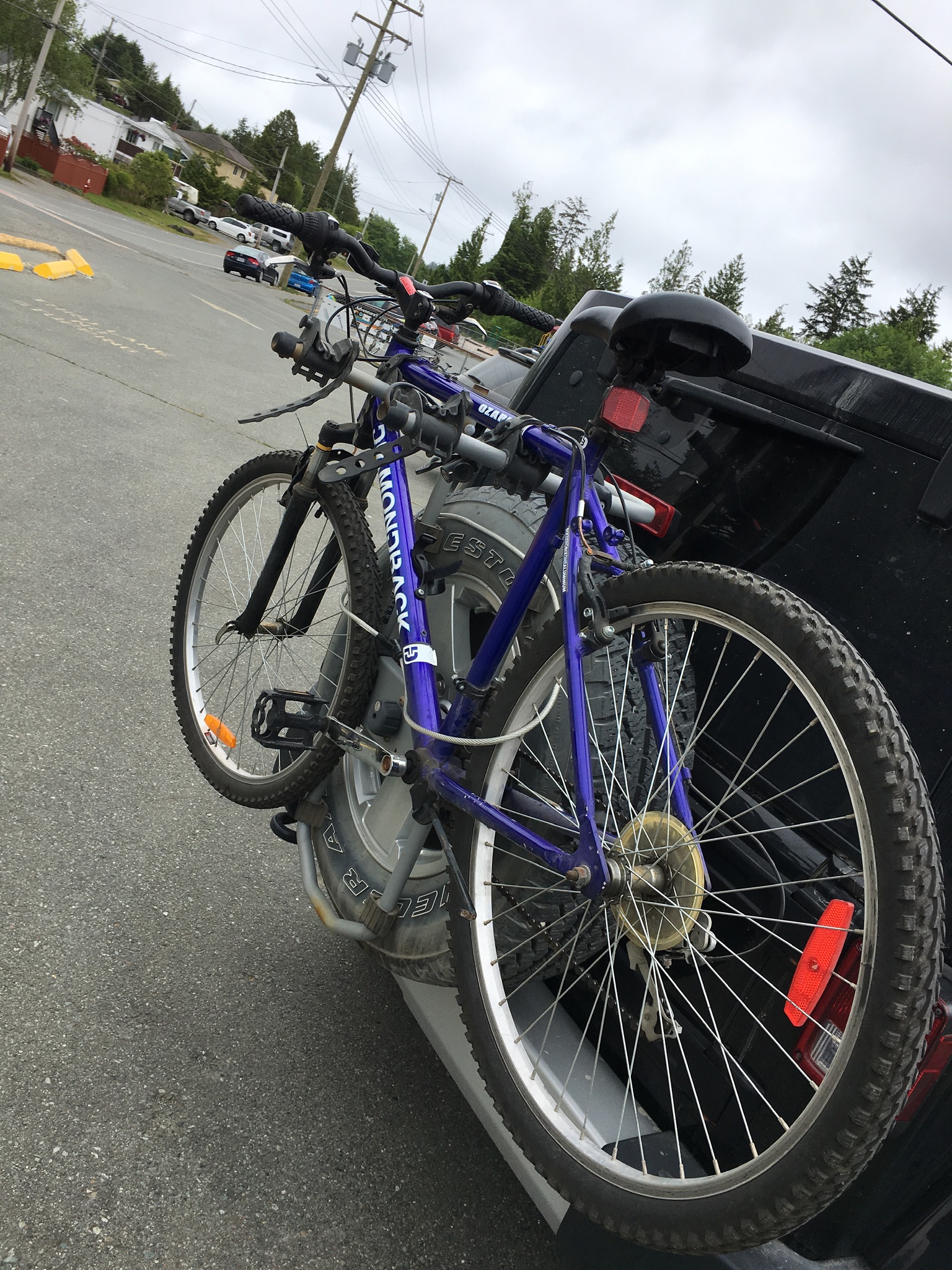
The local community has been geared up with encouraging as many people as possible to ride their bikes this week. Well, I have found out that it’s a good idea to ride a bike a bit more frequently than I have been. Ouch. Still, complaining muscles (and complaining about muscles – or lack of) and a wobble or two have all been part of the fun.
Bikes!
What a sight it was on Monday at school to see over 110 bicycles out front, and only one vehicle in the parking lot. On Tuesday, the bike count was almost 140. That day, I felt terrible for riding home at lunchtime and coming back in the Jeep. I had work to do later in the afternoon over the bay, and I would have been very late if I’d cycled. I’m all about the journey, not the destination. I like to say that, it sounds better than “I can’t pedal very quickly!” Maybe an e-bike is the answer? Pedal assist on the hills, and self-propelled on the flat. I’m fairly sure I’d end up deciding it was all hills and require a lot of assistance…
Time to stop and smell the roses – and I was tired
I’ve included a few photographs from my pedalling travels this week. You’ll understand I was only stopping to take a picture, and not because I’d ridden up a small hill or slight incline and needed a quick rest.
Bike to work, not bring your bike to work
I have enjoyed getting back on the bike, and I’m committed to cycling whenever my work is in Ucluelet, and only driving for the trips over the bay or to meetings in distant places. Have you seen the price of gas? Yikes! Perhaps the wobbling will diminish, the hills will seem flatter, and I’ll be a speedy two wheeled PlaidCamper. So please take care as you overtake that grizzled geezer on his bike – he’s doing his best and going as fast as he can!
Stopped to look at the boat, not stopped for a rest
Speedy as promised – thanks for reading and have a wonderful weekend!
 August/Fogust
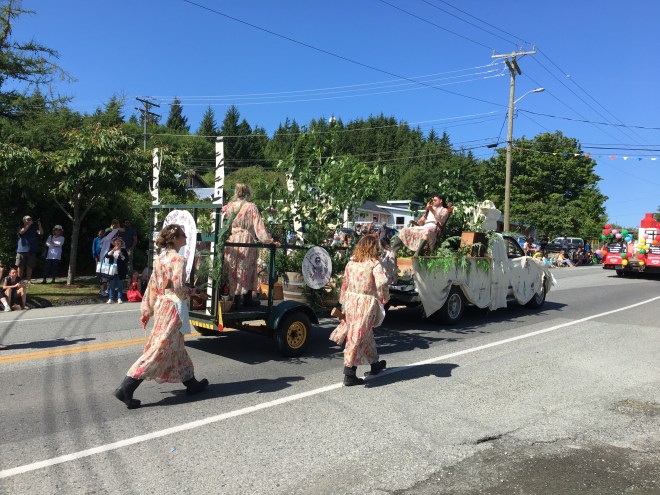 The parade went down Seaplane Base Road to the fairground and a field of tempting deep fried foods and a beer garden. As you know, I’m quite an avid gardener and did peruse the beer garden. The Tofino Blonde was thriving…
 Coffee stop – four coffee shops two minutes or less from here (but keep that quiet)






















 OldPlaidCamper